Safety guides
How to Spot a Trustworthy Online Pharmacy
A practical, non-alarmist guide to spotting a trustworthy online pharmacy: the signs of legitimacy, the red flags to avoid, and simple steps to protect your money and health.
Buying medicines and supplements online can be convenient, but knowing how to identify a trustworthy online pharmacy matters just as much as knowing what you want to buy. A legitimate store is open about who it is, how it ships, and what it sells, and it never pressures you into a decision. This guide walks through the practical signs of legitimacy, the red flags worth avoiding, and simple steps to protect both your money and your health.
Why taking a moment to check pays off
When you order in person, you can see the shop, read the label, and ask a question at the counter. Online, you rely on the information a website chooses to share. That is not a reason to worry, but it is a good reason to slow down for a minute before you order. A short check helps you feel confident that the store is real, that it stands behind what it sells, and that you know what to expect after you place an order.
The good news is that trustworthy stores tend to make this easy. They put their contact details, policies, and product information where you can find them. If you have to hunt for basic facts, that itself tells you something.
Signs of a legitimate online pharmacy
Legitimacy usually shows up in small, consistent details rather than one big badge. Look for the following:
- Clear contact details. A real business gives you a way to reach a human, such as an email address or a contact form, and explains how it handles questions.
- Transparent policies. Shipping, returns, and privacy information should be published and easy to read. Our shipping policy and returns policy show what plain, upfront policies look like.
- Real product information. Each product page should describe what you are ordering and point you to the label and manufacturer details rather than relying on vague promises.
- A secure connection. Check that the web address begins with "https" and that pages load properly, so information you enter is protected in transit.
- A consistent, careful tone. Trustworthy stores explain things honestly, including limits, instead of promising the world.
For a deeper walkthrough of reading a product page well, our guide on how to review product information before ordering is a helpful companion to this article.
Green flags vs red flags at a glance
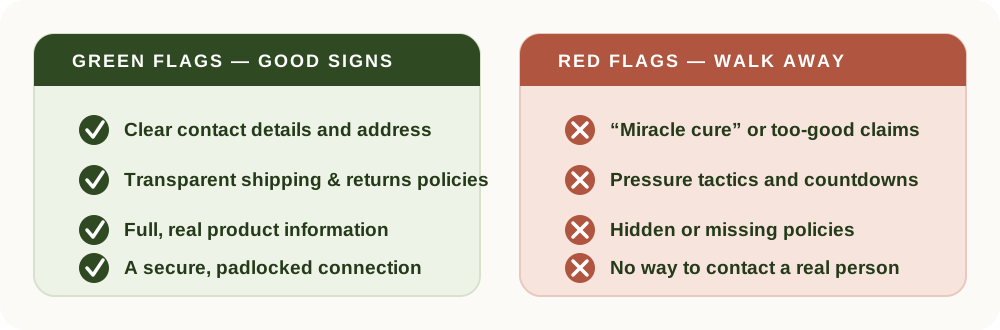
The quickest way to build a habit is to compare what reassures you with what should give you pause. Use the table below as a mental checklist while you browse.
| Green flags (reassuring) | Red flags (be cautious) |
|---|---|
| Contact details are easy to find | No way to reach anyone, or contact info hidden |
| Shipping and returns clearly explained | Policies missing, vague, or buried |
| Honest, plain-English product descriptions | Miracle claims or promises of a "cure" |
| Calm browsing with no pressure to rush | Countdown timers and "act now or lose it" tactics |
| Secure "https" connection on every page | Broken pages or an insecure connection |
| Points you to the label and a professional | Tells you to change your medicines yourself |
| Reasonable, transparent expectations | Requests for unusual payment methods |
Red flags worth walking away from
A single warning sign is not always proof of a problem, but a cluster of them is a good reason to shop elsewhere. Watch especially for these:
Miracle claims
Be wary of any site that promises a product will cure, treat, or prevent a disease, or that describes something as "safe for everyone." Health is individual, and honest stores avoid sweeping guarantees.
Pressure tactics
Countdown clocks, "only two left," and messages designed to make you panic are meant to stop you from thinking clearly. A store confident in what it offers does not need to rush you.
Hidden or missing policies
If you cannot find out how a store ships, how returns work, or how it protects your data, treat that as a reason to pause. Requests for unusual payment methods are another common warning sign.
Tip: If a claim sounds too good to be true, treat it as a prompt to slow down. Read the product label, and take any health question to a qualified healthcare professional (doctor or pharmacist) before you buy.
A "before you buy" checklist
Before you complete an order, run through a few quick checks. This keeps the habit light while covering what matters most.
| Check | What good looks like |
|---|---|
| Contact options | A clear email or form, and a stated way to get help |
| Shipping details | An explained process you can read before ordering |
| Returns process | Plain steps for what to do if something is wrong |
| Product information | Honest descriptions that point to the label |
| Secure connection | "https" in the address and pages that load properly |
| Overall tone | Calm and factual, with no pressure or hype |
Steps to protect your money and your health
A few general habits go a long way toward a smooth experience:
- Read the policies first. Skim shipping, returns, and privacy before you add anything to a cart, so there are no surprises later.
- Keep your own records. Save your order confirmation and any messages, and note what you ordered and when.
- Understand how checkout works. Some stores confirm an order first and handle payment separately rather than charging you online at that moment. Knowing the flow in advance helps you feel in control.
- Check the product against its label. When your order arrives, read the label and follow it, and store everything as directed.
- Ask a professional about health questions. For anything about whether a product suits you, a qualified healthcare professional (doctor or pharmacist) is the right source. Never start, stop, or change a prescription medicine on your own based on a website.
It also helps to understand the products themselves, so you know what you are comparing when two versions of a similar item sit side by side.
Keeping trust going after your order arrives
Trust is not only about the moment you click "order." How you handle a product at home matters too. Store medicines as the label directs, keep them away from children, and check expiry dates before use. If you ever have a concern about a product you received, contact the store, and raise any health worry with a qualified healthcare professional (doctor or pharmacist).
The bottom line
Spotting a trustworthy online pharmacy comes down to a handful of steady habits: look for clear contact details and transparent policies, read honest product information, confirm a secure connection, and be ready to walk away from miracle claims or pressure tactics. None of this takes long, and it puts you firmly in control of your own choices. When a health question comes up, always follow the product label and speak with a qualified healthcare professional (doctor or pharmacist). If you would like to keep learning, browse more practical guides on our blog and take your time choosing a store that earns your confidence.
Article FAQs
Frequently asked questions
What is the first thing to check on an online pharmacy?
Start with the basics: can you find clear contact details and read the shipping, returns, and privacy policies before ordering? A trustworthy store makes this information easy to locate. If those essentials are missing or hard to find, treat it as a reason to slow down.
Are miracle claims a reliable warning sign?
Yes. Be cautious of any site that promises a product will cure or prevent a disease, or claims something is safe for everyone. Health is individual, so honest stores avoid sweeping guarantees. Take any health question to a qualified healthcare professional (doctor or pharmacist) and follow the product label.
How can I tell if my connection to the site is secure?
Check that the web address begins with "https" and that pages load properly, which helps protect information you enter while it is in transit. A secure connection alone does not prove a store is trustworthy, so combine it with the other checks in this guide. Never place personal details into a page that looks broken or insecure.
Why do some stores confirm an order without charging me online right away?
Some online stores confirm your order first and handle payment through a separate step rather than taking a charge at that exact moment. Knowing the checkout flow in advance helps you feel in control and avoid surprises. If anything about the process is unclear, use the store's contact options to ask before ordering.
Should I change my prescription medicine based on what a website says?
No. You should never start, stop, or change a prescription medicine on your own based on a website. Any decision about your prescription belongs with a qualified healthcare professional (doctor or pharmacist) who knows your situation. Always read and follow the product label as well.
What should I do after my order arrives?
Read the label and follow it, check the expiry date, and store the product as directed and away from children. Keep your order confirmation and any messages for your records. If you have a concern about the product, contact the store, and raise any health worry with a professional.