Explainers
Generic vs Brand-Name Medicines: What's the Difference?
A plain-English look at generic vs brand-name medicines: same active ingredient and strength, why generics often cost less, and how to compare with confidence.
If you have ever picked up a medicine and wondered why one box costs more than another that seems to do the same job, you are already asking the right question. Understanding generic vs brand-name medicines helps you shop with more confidence and read a product page without second-guessing yourself. This guide explains what a generic actually is, how quality standards work, why the price is often lower, and how to compare your options calmly and clearly.
What is a generic medicine?
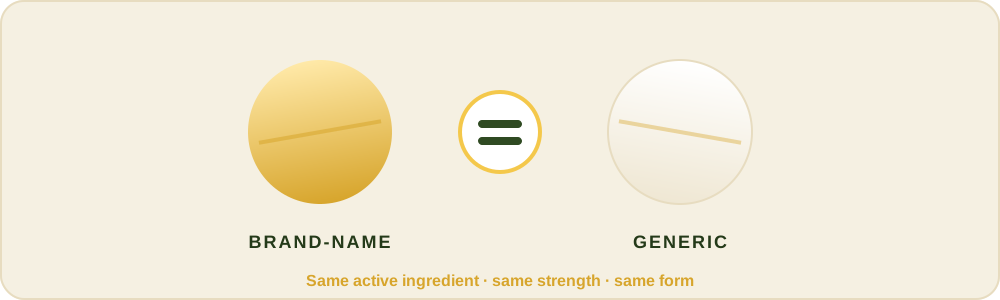
A generic medicine contains the same active ingredient as the original brand-name product, in the same strength and the same dosage form. In plain terms, the part of the medicine that is meant to do the work is the same substance, in the same amount, taken in the same kind of format, whether that is a tablet, a capsule, or a liquid.
When a company first develops a medicine, it is usually sold under a brand name for a period of time. Once that period ends, other manufacturers may produce their own versions. These versions are the generics. They are not copies made in someone's kitchen; they are manufactured products that must meet defined standards before they can be sold.
What can look different
Generics are allowed to differ in ways that do not change the active ingredient. The colour, shape, size, flavour, or the brand name printed on the box can vary. The inactive ingredients, sometimes called excipients, can also differ. These are the binders, coatings, and fillers that hold a tablet together or make a liquid easier to take. If you have a known sensitivity to a particular inactive ingredient, that is a detail worth checking on the label and discussing with a qualified healthcare professional (doctor or pharmacist).
The core comparison at a glance
The table below lays out the main features side by side so you can see where generics and brand-name products match and where they are simply allowed to look different.
| Feature | Generic | Brand-name |
|---|---|---|
| Active ingredient | Same active ingredient | Same active ingredient |
| Strength & form | Same strength and dosage form | Same strength and dosage form |
| Quality/regulatory standards | Must meet defined manufacturing standards | Must meet defined manufacturing standards |
| Appearance & name | May differ in colour, shape and name | Distinct brand look and name |
| Typical cost | Often lower | Often higher |
How generics are held to quality standards
A common worry is that a lower price means a lower-quality product. In practice, generic medicines are expected to meet manufacturing and quality standards, and the manufacturer must show that the product delivers the active ingredient in a comparable way to the original. The goal of these standards is consistency: a tablet made today should behave like one made last month.
This is why reading the product information matters more than the price tag. The label and packaging tell you the active ingredient, the strength, the form, and the manufacturer. If you want a walkthrough of what to look for, our guide on how to review product information before ordering is a practical place to start.
Why generics usually cost less
The lower price of a generic is mostly about cost, not corners. When a medicine is first created, the company behind it spends heavily on research, testing, and bringing it to market, and then on promoting the brand. Later manufacturers of the generic version do not carry those original development and marketing costs in the same way.
- No original research and development bill to recover.
- Little or no large-scale brand marketing spend.
- More manufacturers can mean more competition on price.
A lower price, on its own, is not a red flag. What matters is that you are buying a clearly labelled product from a source you trust. If you are new to buying medicines online, our checklist on how to spot a trustworthy online pharmacy can help you judge that.
Tip: Focus on the active ingredient, the strength, and the form first. If those three match what you were expecting, a different colour or brand name on the box is usually just cosmetic, not a sign of a different medicine.
Common myths versus facts
A lot of confusion around this topic comes from half-remembered advice. Here are some of the most frequent misunderstandings, set next to a plainer view.
| Myth | A clearer view |
|---|---|
| Generics use a weaker ingredient | They contain the same active ingredient at the same strength |
| A different colour means a different medicine | Appearance can vary without changing the active ingredient |
| Cheaper always means lower quality | Lower cost often reflects lower development and marketing spend |
| Generics skip quality checks | They are expected to meet defined manufacturing standards |
| You should switch on your own to save money | Any switch is a decision for a qualified healthcare professional |
How to compare your options confidently
You do not need a pharmacy degree to compare products sensibly. A short, repeatable routine goes a long way, and it works whether you are looking at a generic or a brand-name listing.
- Check the active ingredient name and confirm it is what you expected.
- Confirm the strength and the dosage form match.
- Read the inactive ingredients if you have a known sensitivity.
- Note the manufacturer and keep the packaging until you have finished the product.
- Write down any questions to raise with your doctor or pharmacist.
If you have questions about how ordering works on our store, the FAQ covers the practical side of placing an order. Remember that our checkout creates an order without taking an online card charge at that moment, so take your time comparing before you commit.
When a switch is not your decision to make alone
This is the most important point in the whole article. Deciding whether a generic and a brand-name product are interchangeable for your situation is a clinical judgement, and it belongs with a qualified healthcare professional (doctor or pharmacist). Never start, stop, or change a prescription medicine on your own based on price or packaging.
Some people are prescribed a specific version for reasons that are not obvious from the box, and only a professional who knows your history can weigh that up. If you are unsure, always follow the product label and ask a doctor or pharmacist before you change anything.
The bottom line
Once you understand that a generic shares the same active ingredient, strength, and form as its brand-name counterpart, the choice becomes far less mysterious. Quality standards, not price alone, are what should reassure you, and a lower cost usually reflects savings on development and marketing rather than a weaker product. Compare the label details, keep your questions ready for a doctor or pharmacist, and never change a prescription on your own. When you are ready to look at your options, browse the store and read each product page carefully before you order.
Article FAQs
Frequently asked questions
Do generic and brand-name medicines have the same active ingredient?
Yes, a generic contains the same active ingredient as its brand-name counterpart, in the same strength and the same dosage form. The part meant to do the work is the same substance in the same amount. Differences are usually limited to appearance, name, and inactive ingredients. If you have any doubts, check the label and ask a qualified healthcare professional (doctor or pharmacist).
Why are generic medicines often cheaper?
Generics usually cost less because the manufacturer does not carry the original research, development, and large-scale brand marketing costs in the same way. More manufacturers can also mean more competition on price. A lower price on its own is not a sign of lower quality. What matters most is that the product is clearly labelled and bought from a source you trust.
Is it safe to switch from a brand-name medicine to a generic?
Whether the two are interchangeable for your situation is a clinical judgement, so it is a decision for a qualified healthcare professional (doctor or pharmacist). Never start, stop, or change a prescription medicine on your own based on price or packaging. Some people are prescribed a specific version for reasons that are not obvious from the box. Always follow the product label and ask before making any change.
Why does my generic look different from the brand I had before?
Generics are allowed to differ in colour, shape, size, and the name printed on the box, as long as the active ingredient, strength, and form stay the same. The inactive ingredients that hold a tablet together can also vary. A different appearance is usually cosmetic rather than a sign of a different medicine. If you notice anything unexpected, check the label and speak to your pharmacist.
How can I compare medicines before ordering online?
Start by confirming the active ingredient, the strength, and the dosage form match what you expected. Read the inactive ingredients if you have a known sensitivity, and note the manufacturer. Keep the packaging until you finish the product, and write down any questions for your doctor or pharmacist. Reviewing the product information on each page carefully before you order helps you compare with confidence.
Does a lower price mean a generic is lower quality?
Not on its own. Generic medicines are expected to meet defined manufacturing and quality standards, and the lower price usually reflects savings on development and marketing rather than a weaker product. The goal of those standards is consistency from batch to batch. Focus on clear labelling and a trustworthy source rather than price alone, and follow the product label.